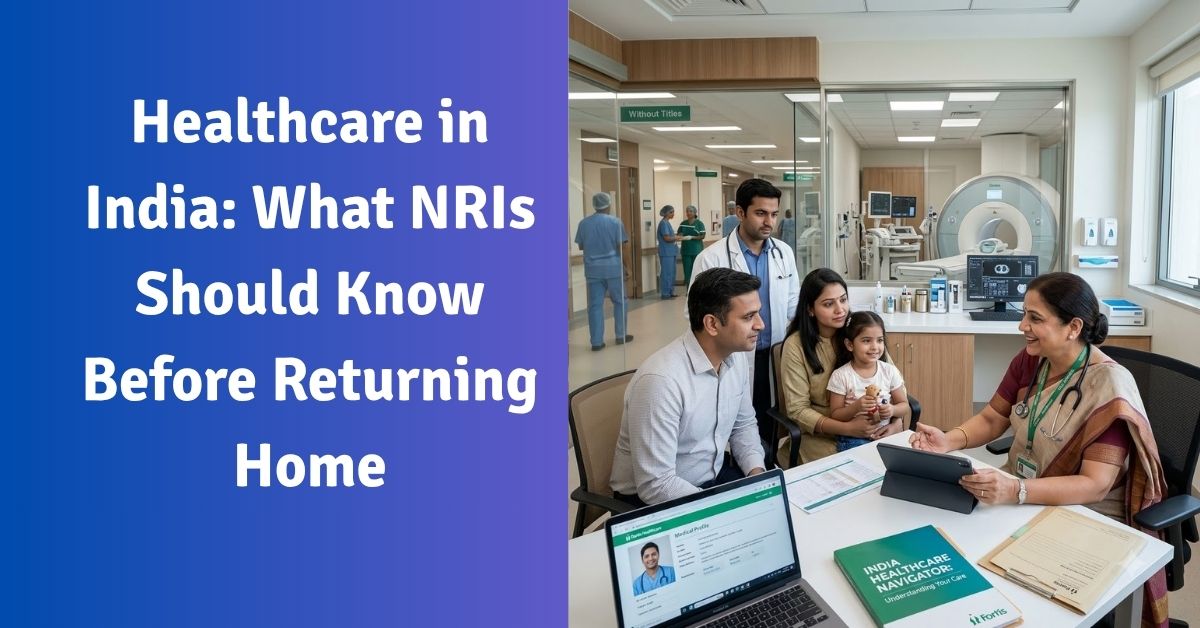
Returning to India after living abroad involves more than arranging travel and accommodation. Non-Resident Indians (NRIs) should understand how healthcare services work, whether their existing insurance covers treatment in India, how to choose hospitals, and what medical expenses to expect. This guide explains the key healthcare decisions NRIs should make before returning home, from arranging health insurance and organising medical records to planning ongoing treatment and managing healthcare costs.
Moving back to India can bring you closer to family, familiar surroundings, and a healthcare system that offers different treatment options across public and private hospitals. However, the healthcare experience may differ from the country where you currently live. Hospital procedures, insurance rules, appointment systems, and personal medical expenses can all affect your transition.
Planning these matters before relocating can help you avoid unnecessary delays and unexpected costs. Whether you are returning permanently, moving with your family, or planning retirement in India, understanding your healthcare options will help you make informed decisions for the years ahead.
1. Understand How Healthcare Works In India
India has both public and private healthcare facilities. Government hospitals provide many medical services at subsidised rates, while private hospitals offer a wide range of consultations, diagnostic tests, surgeries, and specialist treatments.
Public And Private Hospital Options
Government hospitals may be suitable for affordable treatment, although waiting times and access to specialists can vary. Private hospitals may offer more appointment choices and specialised facilities, but treatment costs depend on the hospital, doctor, and medical procedure.
Before returning, research hospitals near your intended home. Check the availability of relevant specialists, emergency services, diagnostic facilities, and follow-up care.
Check Hospital Quality And Doctor Credentials
Do not select a hospital based on convenience or reputation alone. Check the doctor’s qualifications, relevant experience, hospital facilities, and available accreditation. You can also ask for a written treatment estimate before agreeing to a planned procedure.
2. Review Your Existing Health Insurance
One of the first things NRIs should check is whether their current health insurance covers treatment in India. Many overseas health plans provide limited or no cover for treatment outside their approved geographical area.
Will Overseas Health Insurance Cover Treatment In India?
The answer depends on your policy. Some plans provide emergency international coverage, while others cover treatment only in your country of residence. Even when overseas treatment is included, planned procedures may require prior approval.
Contact your insurer and request written confirmation of geographical coverage, exclusions, claim procedures, and reimbursement rules. Do not assume that your existing policy will continue to protect you after relocation.
Should You Consider An Indian Health Insurance Policy?
An Indian health insurance policy may be useful if you plan to live in India permanently. Compare policies based on coverage, hospital networks, premiums, room limits, deductibles, co-payments, and exclusions.
Choose a policy according to your expected healthcare needs rather than selecting one based on its premium alone.
3. Understand Waiting Periods And Pre-Existing Conditions
Health insurance policies may have waiting periods before certain treatments become eligible for coverage. These can include pre-existing medical conditions and specified procedures.
Disclose Your Medical History Honestly
If you have diabetes, high blood pressure, thyroid problems, heart disease, or another existing condition, provide accurate details when applying for insurance. Disclose relevant consultations, medicines, investigations, and previous hospitalisations as requested.
Incorrect or incomplete information may lead to claim disputes or other policy consequences.
Apply Before You Need Treatment
If you are considering an Indian health insurance policy, compare options well before your planned return. Check the waiting periods that apply to your medical history and the treatment you may need.
Remember that buying a policy does not mean every medical expense will be covered immediately. Read the policy wording carefully before making a decision.
4. Plan Healthcare For Your Family
Returning to India may involve moving with a spouse, children, or elderly parents. Each family member can have different medical requirements, so healthcare planning should consider the entire household.
Review Your Parents’ Medical Needs
If your parents live in India, check their existing health insurance, ongoing medicines, regular consultations, and emergency arrangements. Understanding the different types of health insurance in India can help you compare available coverage options and identify a policy that better suits their healthcare needs. Confirm whether their preferred hospitals are covered under their policies.
For elderly parents, pay particular attention to pre-existing conditions, renewal terms, co-payments, and exclusions. If they do not have adequate coverage, compare suitable options based on their age and health.
Arrange Healthcare For Children And Other Dependents
Families with children should identify nearby paediatricians, vaccination services, pharmacies, and emergency facilities. If anyone requires specialist treatment, confirm that suitable doctors and diagnostic services are accessible from your new home.
5. Organise Your Medical Records Before Moving
Medical records help doctors understand your health history and make appropriate treatment decisions. Collect these documents before leaving your current country of residence.
Which Medical Documents Should You Carry?
Keep copies of:
- Previous medical reports, scans, and laboratory results.
- Hospital discharge summaries and surgery records.
- Current prescriptions and medication details.
- Vaccination records and allergy information.
- Details of ongoing treatment and follow-up appointments.
- Health insurance policies and relevant claim documents.
Planning your medical care in advance can make the transition easier. Understanding NRI healthcare options in India can help you prepare for ongoing treatment, specialist consultations, and follow-up appointments after moving.
Arrange A Smooth Transfer Of Care
If you receive regular treatment abroad, ask your current doctor for a medical summary and advice about continuing care in India. Request sufficient medication for the transition, where legally permitted, and confirm that equivalent medicines are available locally.
Do not stop prescribed treatment or change medicines without consulting a qualified healthcare professional.
6. Prepare For Healthcare Costs In India
Healthcare expenses in India vary significantly between cities, hospitals, doctors, and procedures. Although some treatments may cost less than in other countries, the final bill depends on the care required and the facility selected.
Request A Detailed Treatment Estimate
For planned surgery or specialist treatment, ask the hospital for a written estimate. Check whether it includes consultation fees, diagnostic tests, medicines, room charges, surgeon fees, intensive care, and follow-up appointments.
Ask what could increase the total cost if complications arise or your hospital stay becomes longer than expected.
Keep Emergency Savings Available
Insurance may not cover every expense, and claims may require documentation or reimbursement procedures. Maintain an emergency fund for deductibles, non-covered treatments, medicines, and unexpected medical needs.
This financial buffer can help you manage healthcare expenses without disrupting your other financial goals.
7. Check Insurance Claims And Hospital Networks
A suitable health insurance policy should offer practical access to treatment when you need it.
Understand Cashless And Reimbursement Claims
Cashless treatment is generally available at eligible network hospitals, subject to policy terms and claim approval. However, you may still need to pay for excluded expenses, co-payments, or costs above applicable limits. Understanding the difference between cashless and reimbursement claims can help you choose the right health insurance policy and prepare for medical expenses after returning to India.
Under reimbursement claims, you may need to pay the hospital first and submit the required documents to the insurer. Before purchasing a policy, check the claim process, pre-authorisation requirements, submission deadlines, and customer support arrangements.
Before purchasing a policy, understand the claim process, pre-authorisation requirements, submission deadlines, and customer support arrangements.
Keep Your Documents Updated
Provide accurate contact information and complete any required identity or banking formalities. Keep policy documents, premium receipts, claim references, and insurer contact details in a secure place.
These steps can make it easier to manage your policy after relocating.
8. Consider Healthcare When Planning Your Finances
Healthcare should be part of your wider financial plan when returning to India. Relocation can change your income, expenses, tax position, retirement needs, and responsibilities towards family members.
Review Your Budget And Retirement Plans
Estimate your regular healthcare expenses, including insurance premiums, medicines, preventive check-ups, and specialist consultations. If you are approaching retirement, consider how these costs may change over time.
Review your emergency savings and retirement income to ensure that medical expenses do not place unnecessary pressure on your finances.
Get Professional Financial Guidance
Your healthcare decisions may affect other financial commitments, such as investments, retirement savings, and support for dependent family members. A qualified financial adviser can help you review these responsibilities together.
Also, check the tax treatment of insurance premiums and other relevant expenses under the rules applicable to your circumstances. Tax benefits depend on eligibility and current law, so seek appropriate tax advice before making assumptions.
9. Create A Healthcare Checklist Before Returning
Before finalising your move, review the following points:
- Confirm whether your existing insurance covers treatment in India.
- Compare Indian health insurance policies if additional coverage is needed.
- Review waiting periods, exclusions, and claim conditions.
- Identify suitable hospitals, doctors, and emergency facilities.
- Collect medical reports, prescriptions, and treatment summaries.
- Arrange continuity of care for ongoing medical conditions.
- Review healthcare arrangements for children and elderly parents.
- Prepare an emergency fund for unexpected medical expenses.
- Update insurance, contact, and relevant banking information.
Completing these tasks before relocation can reduce uncertainty and help you settle into your new routine with greater confidence.
Conclusion
Returning to India can be a positive step, but healthcare deserves careful attention before you move. Understanding hospital options, reviewing insurance coverage, organising medical records, and preparing for treatment costs can help you avoid common problems.
The best approach is to plan healthcare alongside your relocation and financial goals. With the right preparation, you can make informed decisions for yourself and your family while building a more secure future in India.
Plan Your Return To India With Confidence And Financial Clarity
Returning to India involves important decisions about healthcare, retirement, investments, and your family’s future. As the best financial advisor for NRIs in India, PrimeWealth can help you review your financial priorities and prepare for the next chapter of your life. A well-planned return can make it easier to manage expenses, protect your savings, and stay focused on what matters most.
Your move back home deserves more than last-minute financial decisions. Whether you are preparing for retirement or planning a permanent return, the right guidance can help you move forward with greater clarity. Contact us to discuss your goals and take the next step towards a financially prepared future in India.
Disclaimer: This article, “Healthcare in India: What NRIs Should Know Before Returning Home,” is intended for general informational and educational purposes only and should not be considered medical, insurance, legal, or financial advice. Healthcare services, treatment costs, insurance coverage, and eligibility requirements may vary depending on individual circumstances, healthcare providers, and applicable policies. NRIs planning to return to India should verify the latest information with relevant healthcare providers, insurance companies, and official authorities before making healthcare-related decisions. Consult qualified professionals for advice specific to your needs.
Frequently Asked Questions
Can NRIs Use Healthcare Services In India After Returning?
Yes. NRIs returning to India can access public and private healthcare services. The available treatment options and costs depend on the location, hospital, specialist, and medical requirements.
Does Overseas Health Insurance Cover Treatment In India?
Not always. Coverage depends on the policy’s geographical limits, exclusions, and approval requirements. Confirm the terms with your insurer before relying on overseas coverage for treatment in India.
Should NRIs Buy Health Insurance Before Returning To India?
Comparing policies before returning can help you understand eligibility, premiums, waiting periods, and exclusions. Apply early if you need coverage, but remember that existing medical conditions may not be covered immediately.
What Medical Documents Should NRIs Bring To India?
Carry medical reports, prescriptions, vaccination records, hospital discharge summaries, diagnostic results, and details of ongoing treatment. Keep secure digital copies for convenient access.
How Can NRIs Manage Healthcare Expenses After Relocating?
Compare insurance policies, review hospital costs, maintain emergency savings, and budget for medicines and regular consultations. Include healthcare expenses in your broader financial and retirement plan.